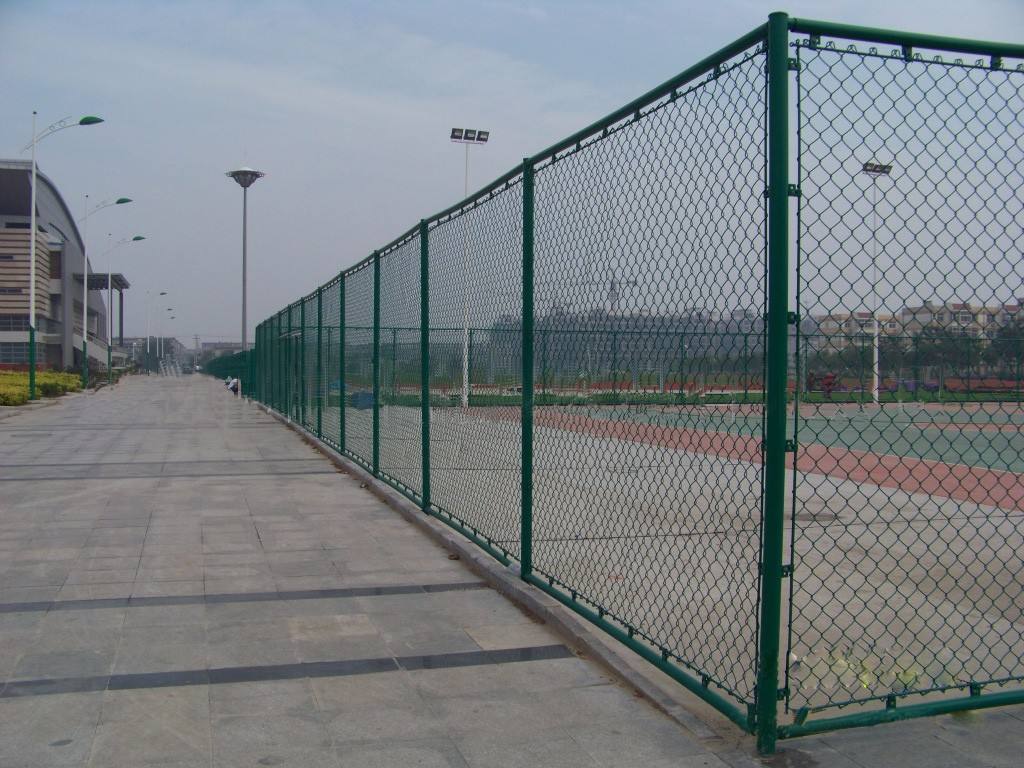
Click a thumbnail to swap the main view · photographs show the product family
Wire mesh fencing
Sports Court Fence
A tall mesh enclosure for ball courts — usually 4 m or 6 m high, in 3.8 mm galvanised and plastic-coated wire, with a 3000 × 4000 mm panel, 60 mm posts and 48 mm cross rails, and post spacing set out on the layout drawing.
- Product category
- Wire mesh fencing — high mesh panel, post and cross rail enclosure system
- Brand
- HONGYING GUARDRAIL
- Manufacturer
- Hubei Hongying Guardrail Co., Ltd. — Jiangxia District, Wuhan, Hubei, China
- Project service
- Made to the project specification: drawing, standard, quantity and destination port
How to select
Start with the height — usually 4 m or 6 m — then the mesh aperture, 45 × 45 mm or 50 × 50 mm, and the galvanised and plastic-coated 3.8 mm wire. The 3000 × 4000 mm panel, the 60 mm post and the 48 mm cross rail follow from those two answers, together with the anti-corrosion finish and the gates. Post spacing and the rail layout are then set out on the layout drawing against the court size, the run to be enclosed, the gate positions and the site exposure.
A court enclosure is a fence whose height is doing the work. The face is a 3000 × 4000 mm mesh panel on a 60 mm post with a 48 mm cross rail, and the wire is galvanised and then plastic-coated at 3.8 mm, so it can be met at speed and still stand the weather over a galvanised core. Heights of 4 m or 6 m are the ones that come up most often, and because the enclosure is tall the post spacing and the number of cross rails are set by the wind load on the line rather than by the panel alone.
Photographs below show the product family; the specification on this page is the manufacturer's published figure and is quoted unchanged.
01 · Product overview
What the sports court fence is made of
The published figures are a height of usually 4 m or 6 m, a 3000 × 4000 mm mesh panel, a mesh of 45 × 45 mm or 50 × 50 mm in 3.8 mm galvanised and plastic-coated wire, a 60 mm post with a 2.5 mm wall and a 48 mm cross rail with a 2 mm wall.
A court enclosure is a fence whose height is doing the work. The published figures are a height of usually 4 m or 6 m, wire that is galvanised and then plastic-coated at 3.8 mm, a mesh of 45 × 45 mm or 50 × 50 mm, and a panel of 3000 × 4000 mm carried on 60 mm posts with a 2.5 mm wall and 48 mm cross rails with a 2 mm wall. Posts, side lugs and bolts are the fittings that come with the system, so the panel, the post and the rail are supplied as one build.
The plastic coating is what makes the wire comfortable to meet at speed and resistant to the weather at the same time, over a galvanised core. Anti-corrosion is published as electro-galvanising, hot-dip galvanising, spraying or dipping, with a primer plus metal paint finish available on request. Where a boundary only has to be closed lower down, the same workshop supplies that work as a chain-link fence in woven mesh, or in rigid panels as a double-wire mesh fence; the 4 m or 6 m enclosure on this page remains the choice where balls have to be kept inside the run.
Not every court wants the same height, and the manufacturer prints the figures used in practice: on tennis courts 3 m along the sides and 4 m at the ends; 4 m or more where the enclosure stands next to housing or a road; 0.8 m where a low surround is enough; and 6 m or more for a court on a roof. Those printed heights are a starting point — the run, the exposure and the gates decide the final layout.
Because the enclosure is tall, post spacing and the number of cross rails are set by the wind load on the line rather than by the panel alone, so both are made to the project specification and confirmed on the drawing. Send the court size, the run to be enclosed, the gate positions and the site exposure.
- HeightUsually 4 m or 6 m
- WireGalvanised then plastic-coated; coated wire 3.8 mm
- Mesh aperture45 × 45 mm or 50 × 50 mm
- Panel size3000 × 4000 mm
- Post60 mm / 2.5 mm
- Cross rail48 mm / 2 mm
- FittingsPosts, side lugs and bolts
- Anti-corrosionElectro-galvanising, hot-dip galvanising, spraying or dipping
Pictured: the high mesh enclosure standing around a ball court, the post with its cross rail and side lug connection at the panel edge, and a run of panels seen along the court boundary.
02 · Technical specification
Sports Court Fence — specification
The figures below are the specification published for this product and are quoted unchanged: they are the numbers a quotation and a shop drawing are built on. Where a row says made to the project specification, send the drawing or the standard you follow and it is confirmed in writing.
| Product / model reference | Sports court fence — high mesh panel, post and cross rail system. Quotation against your drawing or the standard you follow; no catalogue model number is issued until the drawing is agreed. |
|---|---|
| Height | Usually 4 m or 6 m. |
| Wire | Galvanised and then plastic-coated; coated wire 3.8 mm. |
| Mesh aperture | 45 × 45 mm or 50 × 50 mm. |
| Panel size | 3000 × 4000 mm. |
| Post | 60 mm / 2.5 mm. |
| Cross rail | 48 mm / 2 mm. |
| Fittings | Posts, side lugs and bolts. |
| Anti-corrosion | Electro-galvanising, hot-dip galvanising, spraying or dipping; primer plus metal paint on request. |
| Other printed heights | Tennis courts 3 m at the sides and 4 m at the ends; 4 m or more next to housing or roads; 0.8 m where a low surround is wanted; 6 m or more for roof-top courts. |
| Post spacing and rail layout | Made to the project specification — send us the drawing or the standard you follow. |
| Packing, price and delivery | |
| Packing | Panels, posts, cross rails and fittings are bundled and palletised for container loading; the exact packing method is confirmed per specification with the loading plan. |
| Price | Price: quoted per order — FOB Wuhan / Shanghai, CIF or DDP |
| MOQ | Confirmed per specification — send the drawing, quantity and destination port and we reply with MOQ, loading plan and lead time within one business day. |
| Loading | Confirmed per specification — send the drawing, quantity and destination port and we reply with MOQ, loading plan and lead time within one business day. |
| Lead time | Confirmed per specification — send the drawing, quantity and destination port and we reply with MOQ, loading plan and lead time within one business day. |
| Documentation | Proforma invoice, commercial invoice, packing list and certificate of origin as required. Buyers who need CE / EN / ASTM documentation: tell us the standard and we will confirm in writing what we can supply. |
On a narrow screen the table scrolls sideways; every row stays readable in full.
03 · Features
Why this sports court fence is specified
- Height: usually 4 m or 6 m.
- Wire: galvanised and then plastic-coated; coated wire 3.8 mm.
- Mesh: 45 × 45 mm or 50 × 50 mm.
- Panel size: 3000 × 4000 mm.
- Post: 60 mm / 2.5 mm; cross rail: 48 mm / 2 mm.
- Fittings: posts, side lugs and bolts supplied as one system.
- Anti-corrosion: electro-galvanising, hot-dip galvanising, spraying or dipping; primer plus metal paint on request.
- Other printed heights: tennis courts 3 m at the sides and 4 m at the ends; 4 m or more next to housing or roads; 0.8 m for a low surround; 6 m or more for roof-top courts.
- Post spacing and cross rail layout: made to the project specification — send us the drawing or the standard you follow.
04 · Made to your drawing
Made to the project specification
Send us the drawing or the standard you follow and we confirm in writing what we can supply against it. For a court enclosure, that means the height, the mesh aperture and wire, the panel size, the post and cross rail sections, the gates, the anti-corrosion finish and the exposure, so the post spacing and rail layout can be set out.
What settles this specification
The height first, then the mesh and wire, the panel and frame sections, the anti-corrosion finish, and the court layout with its exposure and gates. The plastic-coated 3.8 mm wire is standard for this fence.
05 · Packing, price and delivery
How sports court fence is packed, priced and delivered
Price: quoted per order — FOB Wuhan / Shanghai, CIF or DDP. MOQ, loading plan and lead time are confirmed per specification — send the drawing, quantity and destination port and we reply within one business day.
| Packing | Panels, posts, cross rails and fittings are bundled and palletised for container loading; the exact packing method is confirmed per specification with the loading plan. |
|---|---|
| Price | Price: quoted per order — FOB Wuhan / Shanghai, CIF or DDP |
| MOQ | Confirmed per specification — send the drawing, quantity and destination port and we reply with MOQ, loading plan and lead time within one business day. |
| Loading | Confirmed per specification — send the drawing, quantity and destination port and we reply with MOQ, loading plan and lead time within one business day. |
| Lead time | Confirmed per specification — send the drawing, quantity and destination port and we reply with MOQ, loading plan and lead time within one business day. |
| Documentation | Proforma invoice, commercial invoice, packing list and certificate of origin as required. Buyers who need CE / EN / ASTM documentation: tell us the standard and we will confirm in writing what we can supply. |
| Colour | RAL to sample — send the reference or a physical sample and we confirm the coating or the print on the shop drawing. |
Long sections are bundled by type, so one bundle is one kind of part when the container is unpacked on site.
06 · Questions buyers ask
Sports Court Fence — frequent questions
Every answer below repeats a figure or a term already published on this page; nothing is added to the specification here.
How does the enclosure stand up, and what comes with it?
The published fittings are posts, side lugs and bolts, so the panel, the post and the cross rail are supplied as one build rather than as separate parts. Because the enclosure is tall, post spacing and the number of cross rails are set by the wind load on the line rather than by the panel alone, so both are made to the project specification and confirmed on the drawing.
Can the enclosure be made to my drawing?
Yes. The published figures — height usually 4 m or 6 m, mesh 45 × 45 mm or 50 × 50 mm, wire galvanised and then plastic-coated at 3.8 mm, panel 3000 × 4000 mm, post 60 mm / 2.5 mm and cross rail 48 mm / 2 mm — are quoted unchanged, and the open items of post spacing and rail layout are made to the project specification. Send the drawing or the standard you follow and we confirm in writing what we can supply against it.
Is there a catalogue model number or a published price?
No catalogue model number is issued until the drawing is agreed. Price is quoted per order — FOB Wuhan / Shanghai, CIF or DDP — and MOQ, loading plan and lead time are confirmed per specification; send the drawing, quantity and destination port and we reply with MOQ, loading plan and lead time within one business day.
What height does a court usually take?
Usually 4 m or 6 m. The printed figures used in practice are 3 m along the sides and 4 m at the ends on tennis courts; 4 m or more where the enclosure stands next to housing or a road; 0.8 m where a low surround is enough; and 6 m or more for a court on a roof. Those printed heights are a starting point — the run, the exposure and the gates decide the final layout.
How is it packed, and what documents come with the order?
Panels, posts, cross rails and fittings are bundled and palletised for container loading, and the exact packing method is confirmed per specification with the loading plan. The documents are a proforma invoice, a commercial invoice, a packing list and a certificate of origin as required; buyers who need CE / EN / ASTM documentation tell us the standard and it is confirmed in writing what can be supplied.
Related products
Usually quoted with sports court fence
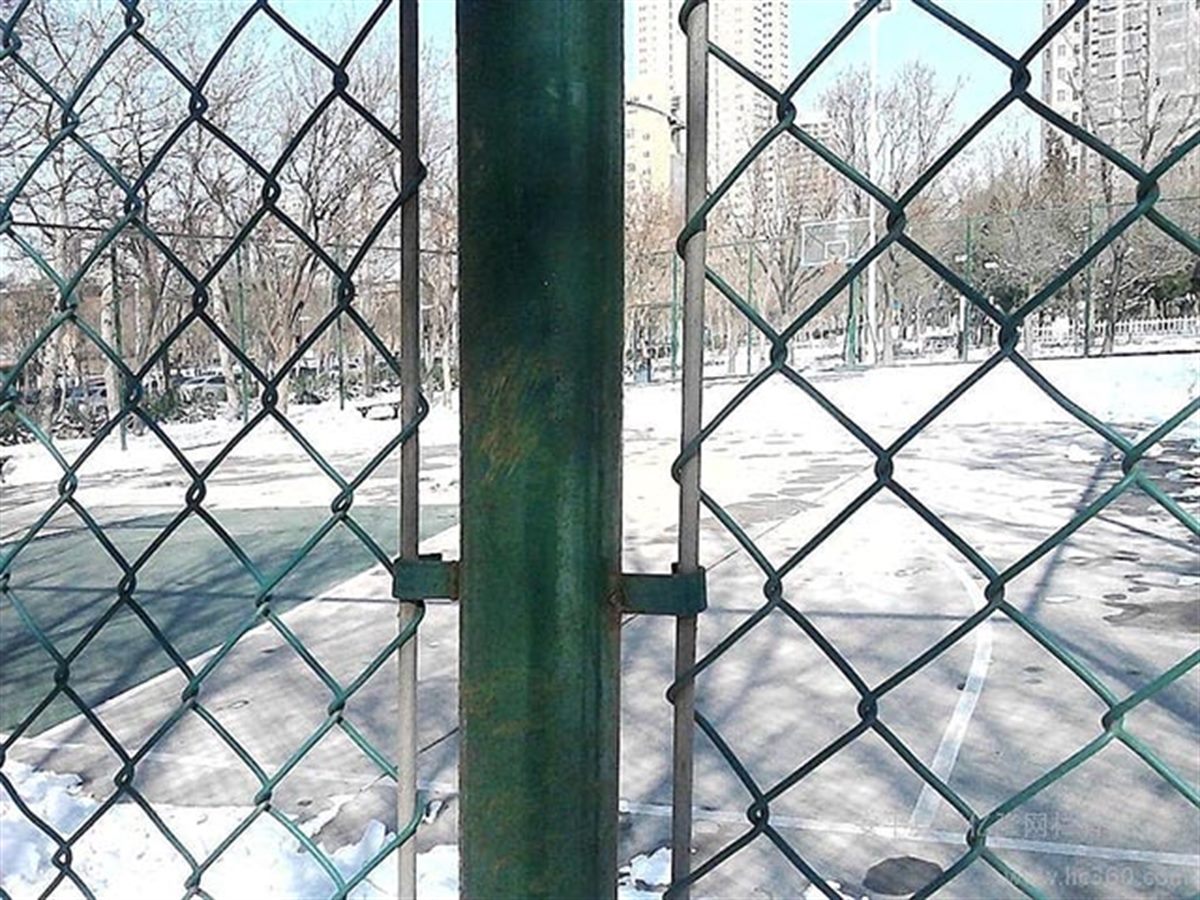 Chain-Link Fence
Woven diamond mesh on round or square posts, in wire from 1.5 to 4 mm, mesh from 50 × 50 to 70 × 70 mm and panels up to 2 × 3 m — PVC coated or hot-dip galvanised, mainly green and blue.
View product
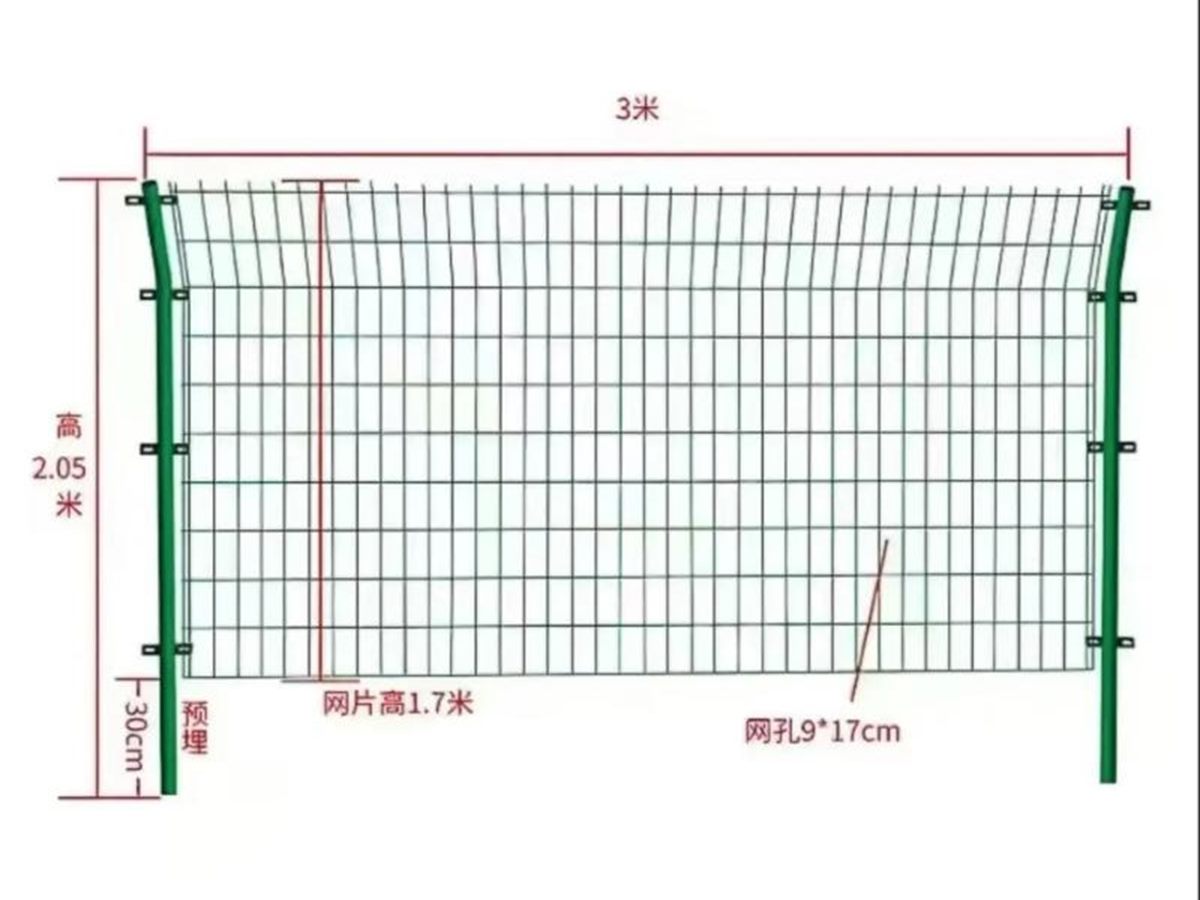 Double-Wire Mesh Fence
Two horizontal wires with a single vertical wire welded into a rigid panel, carried on round or square posts with clamps and post caps — mesh, wire diameter and post spacing made to the project specification.
View product
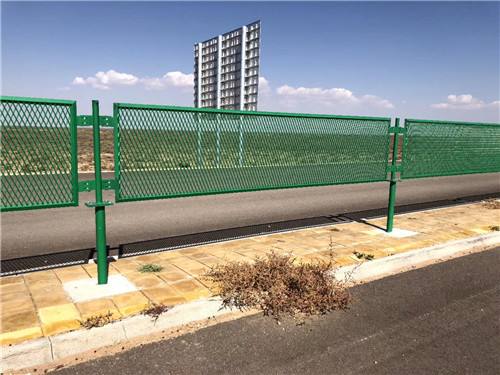 Anti-Glare Mesh
An expanded metal glare screen in low-carbon or stainless steel plate, welded from expanded metal, special-section tube, side lugs and round tube, and connected to hot-dip galvanised posts.
View product
Contact
Send the drawing, the quantity and the destination port
Tell us the specification, the finish, the quantity and where the order is going. Price: quoted per order — FOB Wuhan / Shanghai, CIF or DDP. We reply within one business day.
Office: Room 906, Niuniu Creative Building, Shucheng Road, Hongshan District, Wuhan, China
Factory: Jiangxia District, Wuhan, Hubei, China